Free Web Hosting Provider - Web Hosting - E-commerce - High Speed Internet - Free Web Page
Search the Web

MY STORY


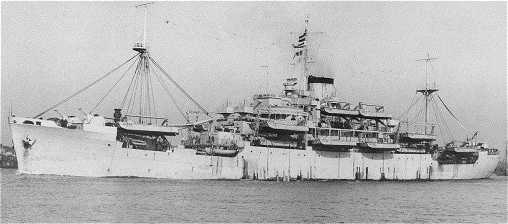
HMS GLENROY

SOME PERSONAL EXPERIENCES OF CPO JOHN PRISCOTT -SHIPWRIGHT Glenroy 1940- 1942

1

In December 1940, I left Portsmouth barracks to travel by train to Liverpool.This train journey took
36 hours via Bristol because of heavy attacks on the railway lines.We lived off sandwiches- meal tickets
were issued which we tendered at the railway station.I was amazed to find the size of the docks at Liverpool ,
48 in all. A hint of things to come was a wool warehouse afire which had been like that for weeks.
The Glenroy was still in dockyard hands being fitted out as a commando carrying troop ship with landing
craft infantry and landing craft mechanical.There were two major troop decks for soldiers and our mess decks
were quite palatial compared to a warship., the ship was fast ,cruising speed 18 knots, well armoured and
quite good anti aircraft protection.

One night when I was walking back to the ship with a mate there was a heavy raid , sparks were dancing off
walls and the street from all the shrapnell from the anti -aircraft bursts.. The ship had been hit with some
incendiaries and damaged and our departure was delayed.We sailed to go to Glasgow where they had to
alter the Davits. I was boasting about the Captains motor boat which had been built by my old firm where
I served my apprentiship,unfortuneatley it all turned to custard when the boat was being lifted out of the water
,(too fast in my opinion). It ripped out the stern fastening arrangements and she dropped heavily back into the water,
We never saw it again. I shall never brag again! We spent Christmass and new years in Delmuire.My first taste
of whisky-- not quite a cot case.

From Glasgow we went to the Isle of Arran where we picked up a troop of Commandos.at Lamlash
on lake Fine,where the kippers came from , the training area.The Commandos used to use the landing
craft "invade" the nearby Island and head for the opposite shore over the mountains.The landing craft
used to pick them up there and bring them back to the Glenroy.we always used to keep our fingers crossed
that we would see them returned fully afloat and serviceable.Can you imagine working on a boat on a
Scottish Loch in the middle of winter,with the wind tearing through you, sleet and snow ,working non stop
until the boat was serviceable ..all night if necessary

.

Capt Sir James Paget

We were there until the end of January and then we sailed from Greenock in the company of two
other Glen boats the Glengylle and Glenearn, We were escorted by two cruisers and 5 destroyers,
(very heavy for those dark days) I think the reason for the very good escort was because included in
the officers in our Commando group were.: Churchill's son Randolf., the son of admiral of the fleet
1914 1918 war , Jellicoe .The two sons ,one naval one commando ,of Admiral Beattie of the Dover
Patrol, The commando son later got a VC for the attack on Rommels HQ.We were not told of our
destination and were issued with both hot and cold weather gear but the Buzz was we where going to
attack the Dodecanese Islands. We headed for Freetown ,Sierra Leone, I shall never forget the stink
of that river, Rotten vegetation and Poo. There was no shore leave we were only there to pick up water
and fuel. Because of the threat of the German pocket battleship the Admiral Von Scheer we headed
for Greenland but eventually we found ourselves in the tropics, Lovely and walm ,balmy nights.and
weeks later we found we were off Cape Town and given shore leave,The home page image is Glenroy going
past Capetown Breakwater.Thanks to John H Marsh Maritime Collection for the use of the Photo.

I remember the trip up the cable car, the view was terrific, John Priscott 's name appears in the visitors
book next to Randolf Churchill and Evelyn Waugh (Author) who was on Glenroy as a war correspondent
. Evelyn Waugh did not stay long when we reached our final destination, He flew back ,to be amongst high
society in London, by Flying boat- lucky man.

Onwards through the Indian Ocean. Stopped at Adu atoll (now a club med I believe) not then though.


Friendly boat race with sister ship the Glengyll

Aden ,Suez ,Port Said thru the canal.

In April  ( easter Sunday as our part of operation Demon.)We were assigned to evacuate 1000 troops from the Island of Lemnos, On the way in crystal clear weather  the Coventry picked up a HUGE  formation of german aircraft, then largest ever recorded on radar up to that  time. EWe were extremly lucky not to be spotted as  in the narrow channels with no room to manoveur  we would have had it . had we been spotted, Our Luck held,


In May we were to go to Crete but Glenroy tried to follow a destroyer out and got stuck on rocks
.(we drew far more)

It took a long time to get us off and yours truly and Jackie Hammerton had the unpleasant task
of filling part of the affected double bottom with cement bags..

Later in May we again sailed with eight hundred troops for Crete. Our escorts were the Coventry,
Stuart and Jaguar, as well as the sloop Auckland., We were  spotted and bombed during the morning of the 26th. In fact the guns  virtually never ceased firing all day, We Prayed as never before for  darkness ,which was late at that time of year and at
and at 6.20pm  we were again heavily attacked by  both dive bombers and then low flying torpedo bombers.
We managed to avoid the torpedeos but had some casualties from near misses and machine gun fire,
The near misses felt like going over pot holes in a car. "stuff "was flying everywhere.
Three landing craft were holed and a dump of canned petrol on the upper deck set ablaze,.
To cope with this we had to turn downwind and away from Crete to bring the wind aft. I had the job
of cutting away one of the blazing landing craft with my trusty axe. I found the steel hawsers surprisingly resistant .All this delay meant a daylight landing,
We were turned back, happily for all concerned. In 2002 ,I found ,as a result of an Xray, that Ihave
a small piece of metal in my wrist.- at that time I thought I had just cut myself.

IN August we took Kiwis aboard (18 battalion) at Ismalia and they practised mock attacks on an "airfield"

In September we had a break at ADU atoll.

In November 1941 Rommell was at the gates of Cairo and Tobruk is besieged., The Royal Navy is
charged with disrupting the Axis supply lines and supplying Tobruk by sea,Only fast ships can attempt this
,as to be caught near Tobruk in daylight meant constant air attacks.Tobruk is being supplied by destroyers
and the famous fast minelayer Abdiel. However the jetty has now been badly damaged and it was decided
to despatch HMS Glenroy with an army working party and a cargo of 'Caiques" or Jaffa boats. The idea
being to unload from the jetty on one side and the caiques on the other thus speeding overnight unloading

The Jetty 1941 TOBRUK

.

Accordingly Glenroy was despatched with the AA c Class cruiser Carlisle as escort. At approximately
1600 hrs just as we where about to have Sunday tea. Our guns opened up, Then there was an almighty
explosion , The ship which is really a living thing with the movement and the noise of fans etc, was dark silent
and still.The Tannoy announces "abandon ship".there was no "Action stations"it all happened so fast, the
ship was like a log in the water. I think we were caught on the hop because for the first time in the war,
we had a fighter airplane flying over us. Fighter escort unbelievable! the Grumman Martlet had gone by
the time I got on deck.There seems confusion as to whether the torpedo was from a u boat or from an
Italian torpedo bomber which had suddenly popped up over the coastline.The uboats had recently appeared
and claimed to Battleship HMS Barham the day before,22/11/41 The different temperatures of the sea due
to the waters of the Nile with fresh and salt water layers made ASDIC detection difficult. We had hugged
the coast where it was shallow to avoid the u boats but this also gave the torpedo bombers an element of
surprise just sweeping in over the coastal hills. before they were detected.

We musterred at our boat stations, mine was a carley float which was dropped into the water, Just a few feet
,as the ship was only six inches from sinking, The majority of the crew and army personnel went aft to be taken
off by destroyer.I got into the float but then the Captain must have thought the ship might be saved.and about
20 of us scrambled back aboard.as a skeleton crew.A stern line was passed to the Carlisle and we where towed
stern frst on to a sandbar where the ship settled

SEE Abandon SHIP PAGE

Plenty of Freeboard.

See the Caiques stacked on deck and the Carley floats on the slips. She must have been painted as the
camoflage is not present in the Capetown Photo taken just a few momths earlier.

We were beached just a few miles off Mersa Metruh just a few minutes flying time from enemy airfields.

The engine room and troop decks were flooded, The aft and forward cargo holds were the onlu buoyancy
chambers keeping Glenroy afloat. These were rapidly flooding by pressure leaks at boundary angles,
electrical cable conduit etc, these had to be stopped urgently and quickly so pumps could cope with the
flow of water and more buoyancy restored, The salvage expert Lt commander Taylor said that all leaks
had to be stopped, holes plugged, g;lands chopped away and plugged and wedges driven in at boundary
angles. I had to try and stem the flow of water for the front and rear holds.NOT an easy job in the dark
Using plugs and wedges and driving them home, around all manner of circular and angular gaps, I couldnt
put my arm over my head for a week afterwards.

I was assisted below decks by a volunteer, phys Ed instructor " Clubs" who helped me all week from
dawn to dusk except during the air raids. the other "Chippee" Wilfee ( Wilfred Streeter) had been hit
on the head by a boom when the Tinfish hit us and was not really in a fit state to climb up and down
in the holds. To give me piece of mind I was quite happy for him to keep a lookout on deck for the
Yellow warning flags from the AA Cruiser. . If it was flown from the cruisers he was to yell down to
us in the hold and we would get out of there smartly , which we did at times.I was rather surprised that he recd a DSM (somewhat unjustly Ifelt ) for this "work"

The fact that Glenroy had been hit was soon well known in Cairo especially by the Italians. My Brother
Ron also in Cairo at the time ,commandeered a truck and tried to race to the rescue, Fortuneatly for him
he was stopped before he got too far.

Patching and tempory repairs took 5 days to achieve, Powerful pumps kept the water at bay and the tugs
successfully got us off the sandbar. Fortuneatly the weather was good.So began the long tow home.

HMS  JARVIS escorting us,, See "MY" Carley float still attached to the rail . Just in case.

all this activity was in full view of the coast well behind enemy lines.Many attacks by bombers and
torpedo bombers followed

over the ensuing seven days.All the torpedos passed in front of the ship, we were so low in the water
we put up a huge bow wave which fooled the enemy into thinkinhg we were faster tha we were.At one
stage the navigator threw an union and a lump of wood overboard from the bow to estimate speed
we were so slow the log didnt operate) He estimated it at a KNOT and an onion.

(

the navigator

Here we are under tow by two tugs

As there was no power a field kitchen had been put on board from which bully beef was cooked
in a thousand ways.

Water from the engine jacket was used for cooking, Water in "Jerry" cans was for drinking only.
We had the run of the ship and the contents of the canteen was soon liberated especially the Nestles
Milk chocolate which was normally rationed This was locked in the case the chippies had nade to
protect the Piano from army boots etc,Pineapple was also available however after a few days in the
salt water the cans were already starting to spoil,The ships condenser also supplied a rusty qty of fresh
water,for drinking, All hands slept on deckat night in case of torpedeo attack,

We were attacked  on several occasions but because the ship was putting up such a high wake all the torpedoes missed, passing harmlessly in front.

Seven days later we reached Alexander, and had to sit off the harbour whilst the ballast was shifted
so we could enter, We drew more than a battleship.Eventually we went ashore .,

LOW IN THE WATER BUT IN ALEX HARBOUR

At the dockside I was met by an attractive woman who handed me a toilet bag with soap toothbrush and razor
( we hadnt had a wash for weeks and the equivalent of a one pound note in Egyptian Piasters, The RED CROSS
Illl always bless them for it. Angels of mercy.

In fact I had to report sick with severe tonsillitus. No penicillin in those days. So just gargling with blue tincture
was all they could treat me with.. I was in a forward desert hospital for two weeks with lots of wounded soldiers
,as the Germans were only 50 miles away ,. A naval surgeon asked me which ship Iwas from ,and ,on hearing
from the Glenroy he cheered me up no end by telling me it was sunk,He said it was sunk in the harbour as a
block ship. I got out of the hospital as fast as I could and in the ambulance going through the streets of Alexandra
on the way to the ex Egyptian army barracks, the Arabs where spitting and throwing stones at us and giving
abusive gestures. I just hoped we didnt get a puncture, At the barracks named HMS Canopus
(followng in my fathers footsteps here both he and his father also seved in ships of that name)the Master at
Arms (policeman) said, heres a rifle (italian with no ammunition) See that wall over there, ( Castellated something
like in Beau Gest) Thats your action stations, in the event of an expected breakthrough you go to that wall,
I thought to myself." where's my ammunition, perhaps a pair of running shoes would be better! "We had an
exercise within a few hours andwith climbing up unto the wall there was the most pleasant sight I could see
, The Glenroy afloat(MY HOME) I immediatlty asked to be posted back aboard and was on the next boat.
There was only a handful of crew aboard and we could almost choose what cabin we prefered. I was in the
Lt. Colonels cabin which was previuosly occupied by a rear Admiral of the Boer war and WW1, He had
one more medal than King GeorgeV. If I had been King George Iwould have made sure that wasnt the case.

The cabin was on A deck behind the bridge and besides the captains -the best on the whole ship.The only
drawback was the bed springs where bug infested so I had to apply a blowtorch to them..

Writing home from "my" cabin, Note ever present Cig, fountain pen and photo of my future wife.

Glenroy was moved to the battleship Queen Elizabths berth. and every time an enemy reconaissance
plane came over the smoke screen pots arond her were lit.These smoke pots were foul and emiitted a
stinking thick black smoke. The idea was to fool the enemy the QE was still at her berth and not ,as in
fact as it was ,badly damaged in dry dock as a result of the famous attack by Italian Frogmen.

Then native labourers came aboard to shift the ballast and start on repairs. A savage plague of fleas followed
and we all moved ashore to the Atlantic hotel whilst the ship was fumigated. South African divers then attempted
to patch the hole with bulks of timberwhich where tied to the side and pulled around,the hull .This attempt failed
( timbers had been cut too short).

Next a French /Greek company was brought in and huge steel plates were fixed with a Coxs gun
( explosive charge boltss). The size of the hole was enormous, The repair carried at whilst at anchor
was the largest ever attempted up until that time.The twin diesels where stripped and removed as was
all machinery contaminated by seawater. It was cleaned and returned to working order, all this without
dockyard facilities.

The next photo shows one of the three patches coming alongside, you can just see a man at the foot of
the crane which gives you an idea of the scale.

Patch in place

Playing divers with the South Africans.

Glenroy was patched up and sent back to England for a refit, The original crew did not have the
necessary 23 months overseas service to qualify to for passage back the UK, So yours truly had to
pack has bags and lash his hammock and go ashore to HMS Prometheus, the Atlantic hotel formerly
Imperial Airways Hotel, I think we were given this billet because of our somewhat hectic time on Glenroy
.A fews gongs where ballotted out and the Buffer (BOSUN)got a DSM Every morning I was taken by
truck to work at shed 47 at the docks. repairing small craft such as MLs and mine sweepers which were
having a hectic time on the Tobruk run..Glenroy saw action again at the Landings in Sicily and off Sword Beach. D day.

I think I saw a report where she had hit a mine. and was beached on the Aromanches.1941 Crew STOKERS

YOURS TRULY on Right with my Mate Jack Hammerton and heres our team

CONTACT jp.glenroy@xtra.net.nz


Your custom image